Processionary caterpillars and dogs
As spring arrives and temperatures rise, one of the most insidious threats returns for our four-legged friends: the pine processionary (Thaumetopoea pityocampa). Here is what you need to know to protect your dog.
Veterinary emergency
If your dog had visible contact with processionary caterpillars (licking, chewing, paws on threads) or shows intense swelling of the tongue or mouth, sudden heavy drooling, vomiting, difficulty swallowing, eye pain or breathing difficulty, contact a vet or emergency clinic immediately. Do not give medication without professional advice.
Why talk about it now
As spring arrives and temperatures rise, one of the most insidious threats returns for our four-legged friends: the pine processionary (Thaumetopoea pityocampa).
Despite looking like a harmless fuzzy caterpillar, this insect can trigger a true veterinary emergency: the danger is not the bite, but urticating hairs that, on contact with mucous membranes and tissues, can cause intense pain and severe clinical signs.
This guide explains what the processionary is, why it is so dangerous, which symptoms to watch for after a walk in a pine forest, what to do if contact is suspected, and how to prevent it.
What is the processionary?
The processionary is a moth (a nocturnal butterfly). Its name comes from the larvae's habit of moving in single file, forming long chains on the ground like a procession.
It favours pines and cedars: on branch tips it builds white, silky nests that look like candy floss.
The critical period is generally February to May, depending on climate: larvae leave the nests in trees to burrow and complete metamorphosis. This is when dangerous contact with dogs and people is most likely.
How to recognise it
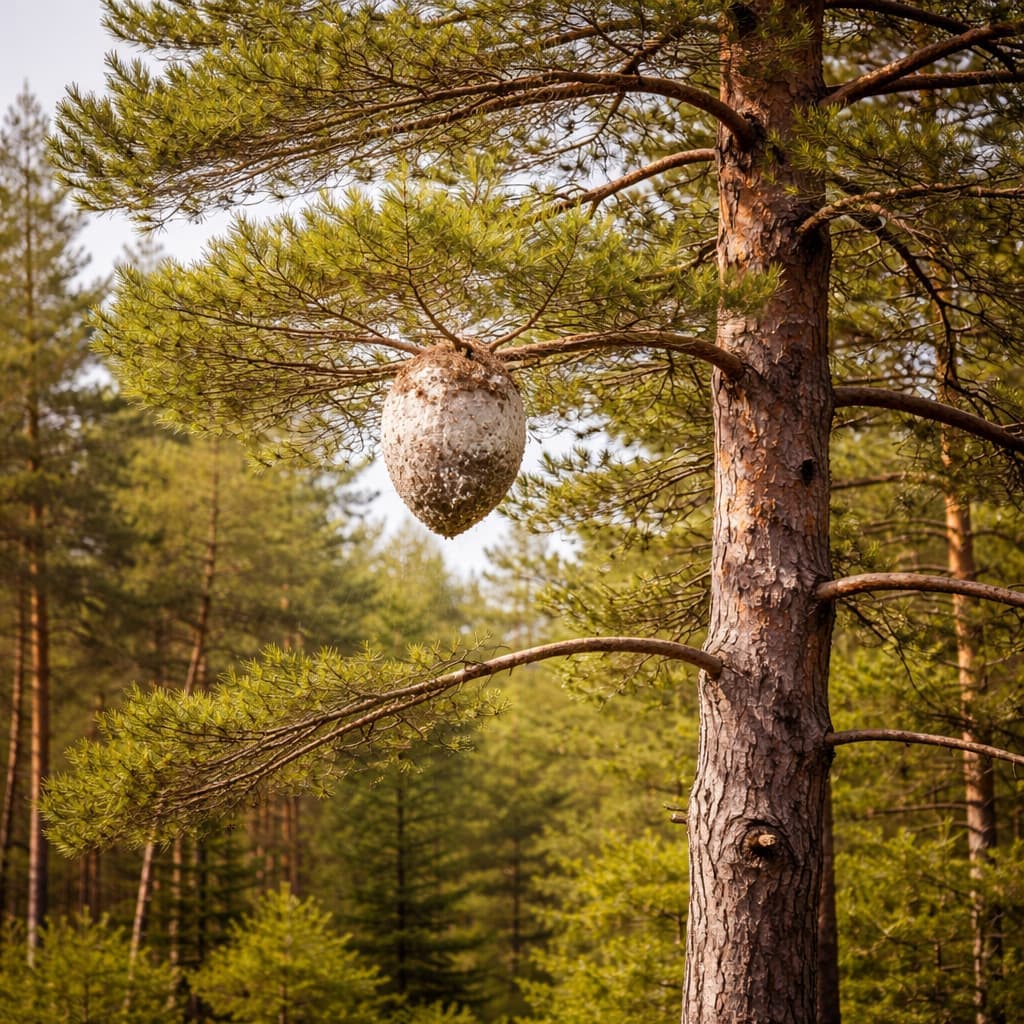
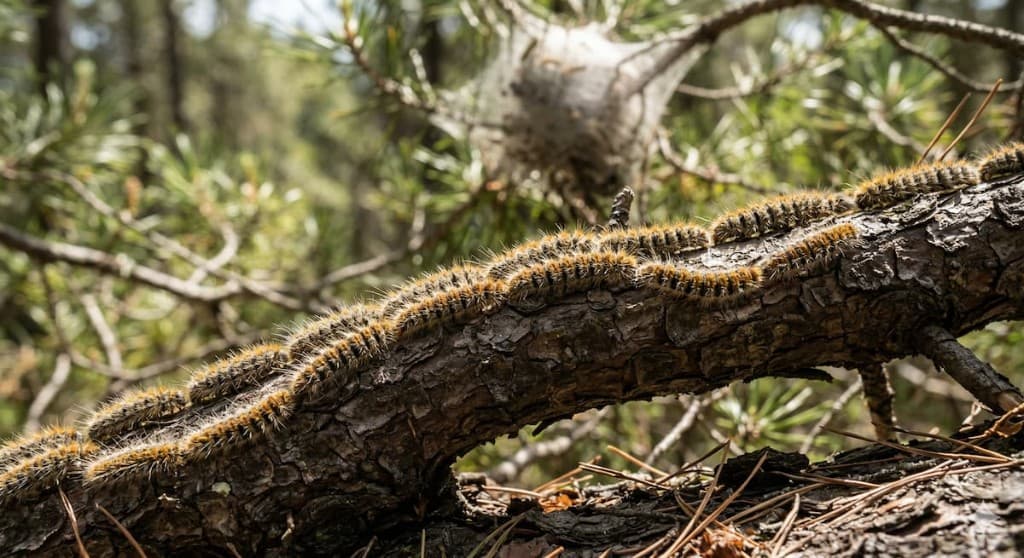
Why is it so dangerous?
The danger is not a bite, but urticating hairs covering the caterpillar's body. These hairs have tiny hooks and can carry protein toxins; scientific literature also refers to substances such as thaumetopoein.
Please note
The hairs are extremely fragile and disperse easily: they can be carried by wind or remain on grass and objects even when no caterpillar is visible.
Scientific explanation (in brief)
The setae are microscopic, pointed and easily shed. On contact with skin and mucous membranes they act as foreign bodies and can promote irritating substances. The result is often a strong inflammatory reaction with pain and swelling; in severe cases tissue damage may require urgent veterinary care.
What happens on contact
When a curious dog sniffs or bites a processionary, hairs penetrate the mucous membranes of the mouth, tongue and nose, releasing toxins. The effect can resemble severe chemical irritation: tissues swell rapidly and in severe cases there may be complications including the airways.
Symptoms to watch for
Signs often appear quickly and are very painful. After a walk in a pine forest, if you notice one or more of these signs, go to the vet without delay:
- Sudden intense salivation: the dog drools heavily (ptyalism).
- Tongue inflammation: it may swell markedly and make it hard to close the mouth.
- Acute pain: the dog seems agitated and rubs its muzzle on the ground or with its paws.
- Fever, loss of appetite and lethargy; in severe cases breathing difficulty may also appear.
- After a few days, affected parts of the tongue may look dark or damaged: this always needs immediate veterinary assessment.
Where and when to be extra careful
Risk is higher near pine woods, avenues with pines or cedars and green areas where nests appear. Your municipality, local health authority, parks and your vet are the best references for your area.
After strong wind, pruning or green maintenance, hairs may be more widespread on the ground and surfaces: be more cautious even if you see no caterpillars or nests.
Prevention: practical tips
Avoid high-risk areas
In spring, when possible, avoid parks or paths with pines or cedars if you notice white nests on branches or threads on the ground.
Short leash
In suspicious areas keep your dog close and stop it exploring undergrowth, sniffing trunks or rolling in contaminated spots.
Report to the community
If you see processionaries or nests in public areas frequented by dogs, report the danger from the Amico Fido app (dangers map) and, where appropriate, inform the municipality or whoever manages the green spaces — you help other owners avoid the area.
Checks after the walk
On return check paws, between toes, muzzle and eyes. If in doubt, contact your vet before using products or rubbing the mouth.
First aid: what to do (and what to avoid)
If contact is suspected, time matters: stay calm and involve your vet immediately.
What to do right away
- Rinse generously: while waiting for the vet, rinsing the mouth with lukewarm running water may help. Some guidelines mention a dilute water and bicarbonate solution or a needle-free syringe for gentle irrigation; the approach depends on the case and should always be agreed with the professional.
- Protect yourself: wear gloves if you need to handle the muzzle. Hairs can cause dermatitis and conjunctivitis in humans too.
- Go to the vet: even if the dog seems to settle, the situation can evolve. Call the clinic, describe where you were and what happened.
What not to do
- Do not rub hard with cloths or bare hands on the affected area: you risk further breaking the setae and helping toxins penetrate.
- Do not give drugs, creams or home remedies on the mouth or eyes without veterinary advice.
Have you seen a processionary or a nest in a public area? Report the danger from the Amico Fido app and, if needed, contact local authorities or the municipality to protect other dogs and people who use the area.
This page is for information and education only: it does not replace a veterinary visit, diagnosis or prescribed treatment. Every dog and situation is different; if in doubt or in an emergency, always contact a veterinarian.
Frequently asked questions
- Is contact always visible?
- Not always. Hairs can be on the ground or grass without caterpillars in sight. Checking paws, coat and behaviour after walks helps you act early.
- Can I use water and bicarbonate without calling the vet?
- Bicarbonate is mentioned in some sources as a rinse aid, but the choice depends on the case and which eyes/oral cavity are involved. Always call your vet: first aid does not replace clinical assessment.
- Is it only a problem in the south?
- It is typical of Mediterranean climates but spread and risk periods vary. Rely on up-to-date local sources and your veterinarian.
- How can I help other owners?
- If you notice nests or threads in areas frequented by dogs, report the danger on the Amico Fido map from the app and report the issue to authorities or the manager of the public green space if appropriate.